Breathe Easy: The Ultimate Guide to Breathing Exercises for Stress Relief in 2026
If you are reading this, chances are you are carrying a weight. Maybe it’s the tension in your shoulders, the knot in your stomach, or the racing thoughts that refuse to quiet down at night. In 2026, the pace of life hasn’t slowed. If anything, the digital noise, economic pressures, and constant connectivity have made chronic stress a near-universal experience. You have likely tried a dozen things to find relief—logging off, exercising, perhaps even medication. But what if the most powerful tool for stress management is sitting right under your nose?
It is. Your breath is the only autonomic function you can consciously control. It is a direct line to your nervous system, a built-in remote control for your mental state. This is not a vague wellness claim; it is grounded in decades of neuroscience. When you are stressed, your breathing becomes shallow and rapid, signaling “danger” to your brain. By changing how you breathe, you can flip the switch from fight-or-flight to rest-and-digest. This article is your comprehensive guide to mastering breathing exercises for genuine, lasting stress relief.
Why Breathing Works: The Science of Stress Reduction
Before we dive into techniques, it helps to understand why this works. Your autonomic nervous system has two main branches: the sympathetic (stress response) and the parasympathetic (relaxation response). When you are anxious, your sympathetic system is in overdrive. It speeds up your heart rate and tenses your muscles.
Breathing exercises, particularly those with extended exhales, physically stimulate the vagus nerve—the primary highway of the parasympathetic system. This nerve runs from your brainstem down to your abdomen. When you breathe slowly and deeply, you increase vagal tone, which tells your heart to slow down and your muscles to release. Studies from institutions like Harvard Medical School have shown that just five minutes of paced breathing can significantly lower cortisol levels and reduce blood pressure. This is not self-help fluff; it is physiology. You are not trying to “think” your way out of stress; you are physically resetting your biology.
5 Essential Breathing Techniques for Immediate Stress Relief
Not all breathing is created equal. Below are five distinct methods, each serving a different purpose—from rapid anxiety relief to deep, restorative calm. Practice each one for three to five minutes to see which resonates with you.
1. Box Breathing (Square Breathing)
Best for: Acute anxiety, panic attacks, pre-meeting nerves.
This technique is used by Navy SEALs and first responders to stay calm under fire. It is simple, structured, and incredibly grounding. The equal ratios create a rhythmic anchor for your mind.
- Inhale slowly through your nose for a count of 4.
- Hold your breath for a count of 4.
- Exhale slowly through your mouth for a count of 4.
- Hold your lungs empty for a count of 4.
- Repeat for 4-5 cycles.
Pro tip: If 4 seconds feels too long, start with 2 or 3. The ratio matters more than the duration.
2. 4-7-8 Breathing (The Relaxing Breath)
Best for: Falling asleep, winding down after a stressful day.
Developed by Dr. Andrew Weil, this technique emphasizes a long, slow exhale. The extended exhale is the most powerful mechanism for activating the parasympathetic system. It forces your body to relax.
- Exhale completely through your mouth, making a whoosh sound.
- Close your mouth and inhale quietly through your nose to a mental count of 4.
- Hold your breath for a count of 7.
- Exhale completely through your mouth to a count of 8, making the whoosh sound.
- This is one breath. Inhale again and repeat the cycle 4 times.
3. Diaphragmatic Breathing (Belly Breathing)
Best for: Chronic stress, reducing muscle tension, improving lung capacity.
Most adults are chest-breathers. This is a shallow, stress-inducing pattern. Diaphragmatic breathing retrains you to use your full lung capacity, engaging the large dome-shaped muscle under your lungs.
- Lie on your back with your knees bent, or sit comfortably. Place one hand on your chest and the other on your belly.
- Breathe in slowly through your nose. Focus on pushing your belly upward into your hand. Your chest hand should remain relatively still.
- Tighten your abdominal muscles and exhale through pursed lips, feeling your belly sink down.
- Aim for your belly hand to rise higher than your chest hand.
4. Alternate Nostril Breathing (Nadi Shodhana)
Best for: Balancing mood, improving focus, reducing mental chatter.
This ancient yogic technique is a powerful tool for stress management. It harmonizes the left and right hemispheres of the brain, creating a sense of centered calm. It is particularly effective when you feel scattered or overwhelmed.
- Sit comfortably. Use your right thumb to close your right nostril.
- Inhale slowly through your left nostril for a count of 4.
- Close your left nostril with your ring finger, release your thumb, and exhale through the right nostril for a count of 4.
- Inhale through the right nostril for a count of 4.
- Close the right nostril, release the left, and exhale through the left for a count of 4.
- That is one cycle. Repeat 5-10 times.
5. Sighing Breath (Physiological Sigh)
Best for: Instant stress relief, breaking a tension cycle.
This is the most rapid stress-reduction technique known to science. It is based on a natural phenomenon your body already does—sighing. Researchers at Stanford University found that a specific pattern of two inhales followed by a long exhale effectively resets the respiratory system and lowers stress within seconds.
- Take a deep inhale through your nose.
- Without exhaling, take a second, smaller sip of air to fully inflate your lungs.
- Exhale slowly and completely through your mouth with a long sigh.
- Repeat 2-3 times. You will feel a physical release in your chest.
Benefits of Breathing Exercises: A Practical Comparison
To help you choose the right technique for the right moment, here is a breakdown of the primary benefits of these methods.
| Technique | Primary Benefit | Best Time to Use | Time to Effect |
|---|---|---|---|
| Box Breathing | Anchors the mind, reduces panic | During acute stress, before a presentation | 1-2 minutes |
| 4-7-8 Breathing | Deep relaxation, sleep induction | Bedtime, after a conflict | 3-5 minutes |
| Diaphragmatic Breathing | Reduces chronic tension, improves lung function | Daily practice, during work breaks | 5-10 minutes |
| Alternate Nostril | Mental clarity, emotional balance | Morning routine, before meditation | 5 minutes |
| Physiological Sigh | Instant stress reset | Any moment of overwhelm | 10-30 seconds |
Common Mistakes to Avoid When Practicing Breathing Exercises
Even the best relaxation techniques can backfire if done incorrectly. Here are the most common pitfalls I see in my coaching practice.
1. Forcing the breath. The goal is not to take the deepest breath of your life. It is to take a comfortable breath. Forcing can lead to dizziness, lightheadedness, and even increased anxiety. If you feel faint, stop and breathe naturally. Ease into it.
2. Holding your breath too long. The retention phases in techniques like 4-7-8 are powerful, but they are not a competition. If you cannot hold for 7 seconds, hold for 3. The key is the ratio, not the absolute count. Pushing past your comfort zone triggers the stress response you are trying to quiet.
3. Expecting instant perfection. If you try diaphragmatic breathing for the first time and your chest still moves more than your belly, that is normal. You have been breathing shallowly for years. Retraining your body takes practice. Be patient and consistent.
4. Practicing only when you are stressed. This is the biggest mistake. Breathing exercises are a skill. If you only practice them during a panic attack, your brain associates the breath with the panic. Practice for 2-3 minutes when you are calm. This builds neural pathways so that when stress hits, your body knows exactly what to do.
Tips for Beginners: Building a Sustainable Practice
Starting a new habit can feel overwhelming. Here is how to integrate breathing exercises into your daily life without adding more pressure.
- Start with 60 seconds. Set a timer for one minute. Do three rounds of the physiological sigh. That is it. Consistency over duration wins every time.
- Anchor it to an existing habit. Attach your breathing practice to something you already do. For example: “Every time I sit down at my desk, I will take three deep belly breaths.” Or, “Every time I brush my teeth, I will do 30 seconds of box breathing.”
- Use a visual or audio guide. In 2026, there are excellent apps and YouTube videos with guided breathing animations. Using a visual pacer (a circle that expands and contracts) can help you stay focused without counting.
- Do not judge your mind. Your mind will wander. It might wander 50 times in five minutes. That is not a failure; it is the practice. Every time you notice you have drifted, gently bring your attention back to the sensation of the breath. That act of returning is the exercise.
- Experiment with position. You do not have to sit cross-legged on the floor. Try lying down, standing in the shower, or even walking slowly. Find what feels natural for your body.
Your Personal Stress Management Toolkit
Think of these breathing exercises as tools in a stress relief toolkit. You would not use a hammer to fix a leaky pipe. Similarly, you would not use a deep relaxation technique when you need an instant reset. Here is a quick guide for common scenarios:
- Feeling a panic attack coming on? Use the Physiological Sigh (2-3 times) or Box Breathing.
- Can’t sleep at 2 AM? Use 4-7-8 Breathing in bed.
- Overwhelmed at work? Step away and do 2 minutes of Diaphragmatic Breathing.
- Feeling scattered and unfocused? Try Alternate Nostril Breathing for 5 minutes.
- General daily maintenance? Practice 5 minutes of Belly Breathing as a mindfulness ritual.
For more support on your journey, explore A Single Parent’s Quest for Happiness by Sarah Abraham — available now on Google Play Books.
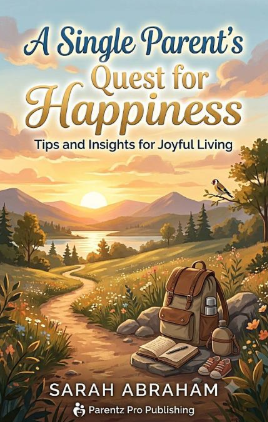
Find Calm and Happiness
Discover practical strategies for managing stress and finding joy as a single parent. This heartfelt ebook by Sarah Abraham offers the guidance you need.
Conclusion: Your Breath Is Your Anchor
In a world that constantly demands your attention, your reaction, and your energy, your breath remains a quiet, constant anchor. It is the one thing that is always with you, always available, and always free. You do not need a special room, a subscription, or an app. You just need a few seconds and the willingness to turn inward.
I know that when you are in the middle of a stressful moment, the last thing you want to do is “breathe.” It feels too simple, too passive. But that simplicity is its power. It cuts through the noise. It interrupts the spiral. It reminds your nervous system that, in this very moment, you are safe.
Start today. Not tomorrow, not when the stress is unbearable. Right now. Take a slow inhale. Let it go with a long sigh. Notice how your shoulders drop just a fraction of an inch. That is the beginning. That is the doorway to a calmer, more resilient you. You have the tools. You have the science. Now, you just have to breathe.
Related Articles You Might Find Helpful
Disclaimer: This article is for informational purposes only and does not constitute medical advice. Always consult with a qualified healthcare professional regarding your mental health.
Leave a Reply